
This is the end of my bread baking experience for now. I thoroughly enjoyed every minute of the time. Usually in groups there is someone who is always late or someone who is really annoying and that really wasn’t the case this time. Everyone showed up at least 15 minutes early every day. There were a couple people with a few little quirks but nothing too bad. Roger and I were great partners and we always seemed to be the first ones done with any part of the projects.
Today was French Bread day. Our instructor today was Jeff. He had worked at Columbia City Bakery in Seattle at one point in his career. This was the one I had really been waiting for. We started off with a big pile of dough that they had made in the machine and all chipped in to preform the dough as they weighed it.
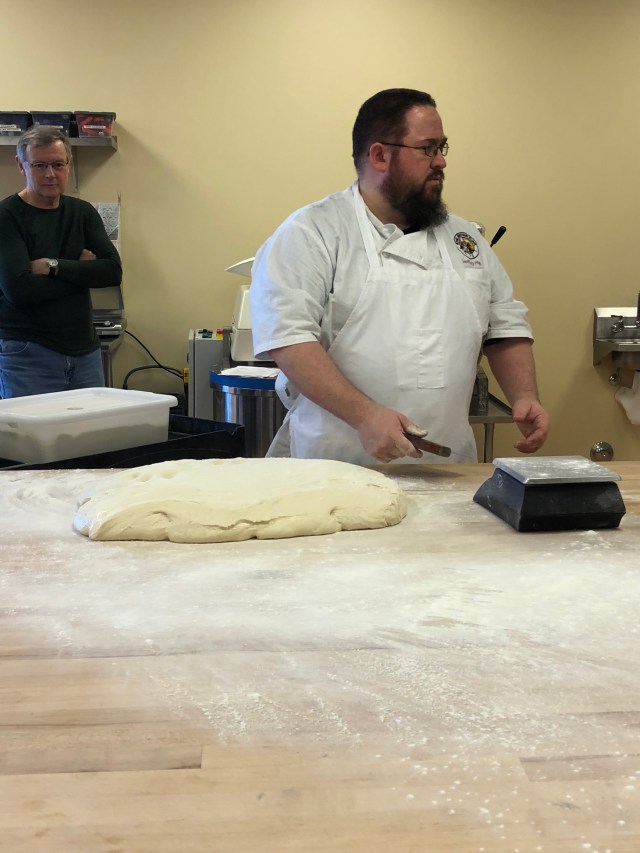
One of the two big batches of dough they had ready for us
Next we went to the front and Jeff mixed up a batch of the dough using the poolish from the night before and adding more flour, yeast and water. This is called a lean dough as there is no butter or other things added to it.
He then showed us how to knead it. The dough is a very wet (hydrated) dough and has to be handled in a different way than the ones we had done before because you want the dough to stay wet and you don’t use flour in the kneading.
They call the process Slap the Cat or Bad Kitty. You put your fingers under the dough horizontally and about 2/3 of the way up (like you pick up a cat under the arms not in the middle) . Then you slap it down on the table and pull back towards you then fold over and do it again.
It is a goopy mess to start and your fingers are covered with dough but the more you do it the more it starts to come together and eventually it quits sticking to the work surface and your fingers. It got really noisy in the room and people’s bowls and other items were being bounced off the work tables and onto the floor, which only added to the noise. It is rather tiring and everyone worked up a bit of a sweat.

First step is sliding your fingers under the mess
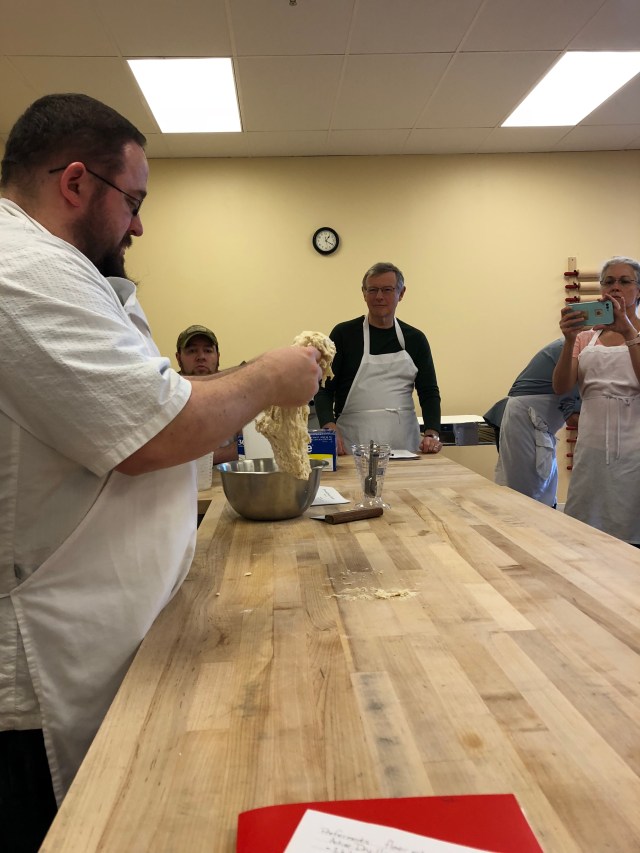
Lift

Slam it down on the table
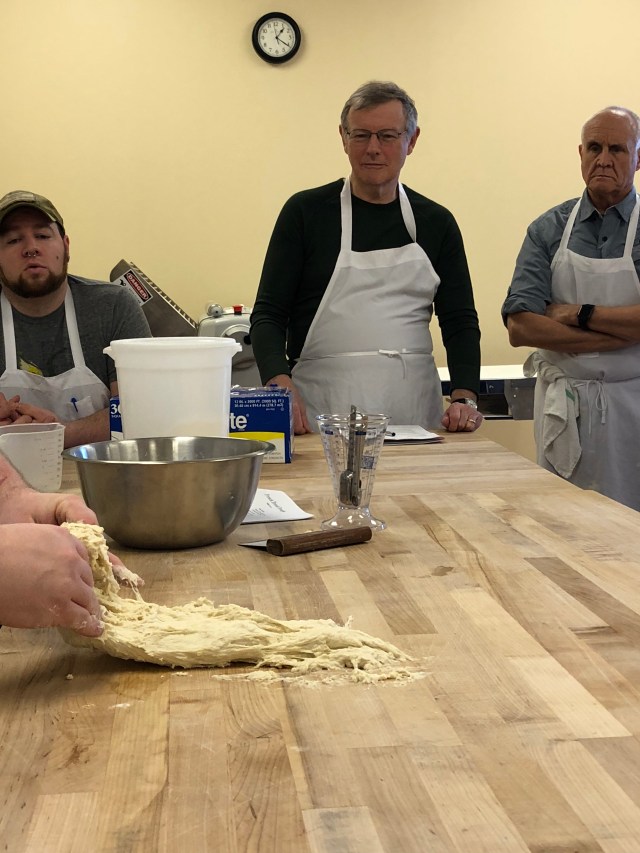
Pull the dough back towards you
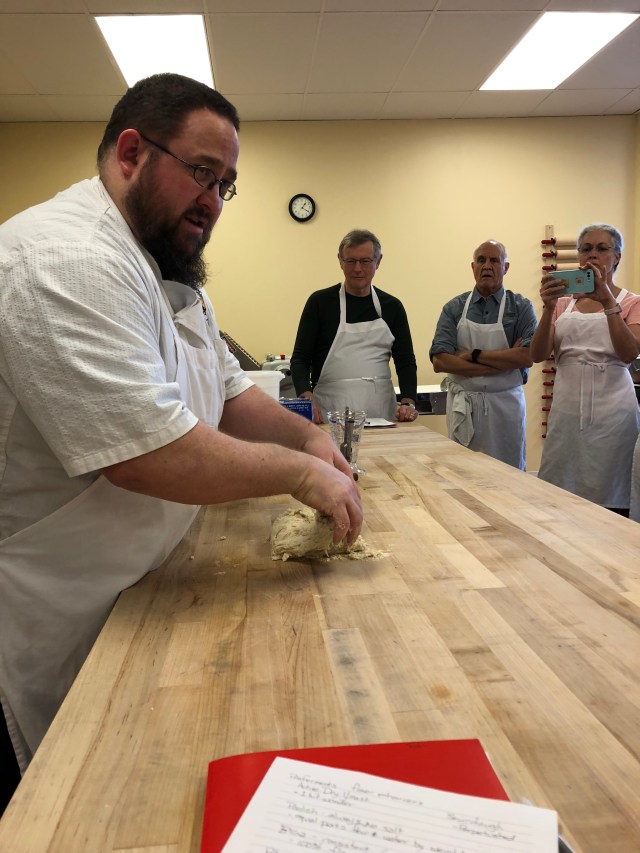
Fold and then repeat
Next he showed us how to form the dough into batards. It is not an easy thing to do. He made it look easy but believe me, looks were deceiving. They had made enough dough so that we all were able to practice on 3 loaves. One we did at the front with him helping then the next two were at our stations. The loaves are then put on a well floured clouche and set to rise.
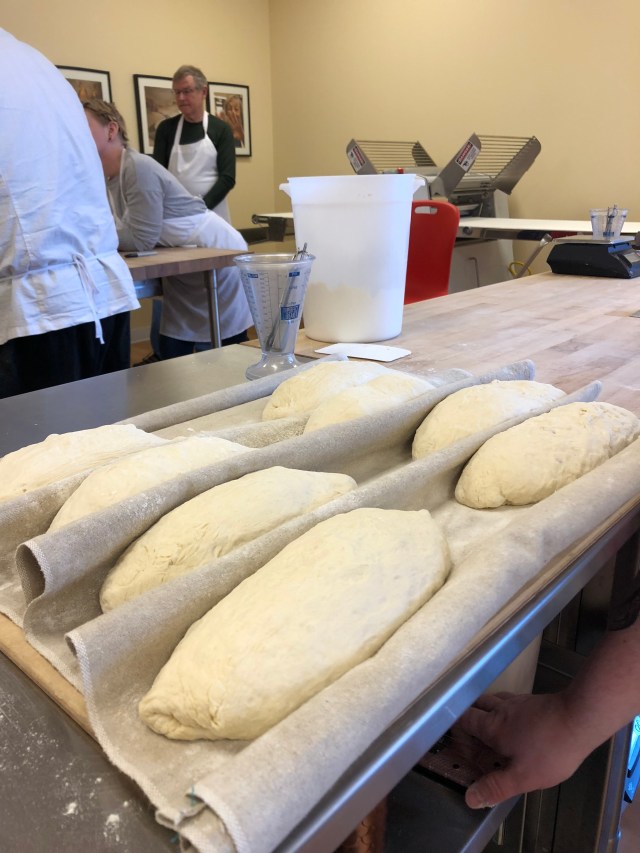
Formed batards on the clouche
Then we were back to the dough we had made earlier. This dough needs to be folded after about 45 minutes of the first rise or proofing. This helps build strength and also rotates the cooler outside into the middle. There is a lot more time spent in proofing and resting this dough than the other ones we had made.
To take up some of the time and also to give us a different kind of ‘dough’ using chemicals (baking soda and baking powder) instead of biologicals (yeast) we were going to make scones
Again, he demonstrated and then we made some. They had currants to put in them. I didn’t take any pictures of the process.
I also didn’t take any pictures of us loading the batards onto the conveyor belt and putting them into the deck ovens. There were probably close to 50 batards from the dough they had premixed that were ready to go into the oven. Everyone took turns loading them and then slashing them.
We then went back to hear Jeff talk us through how to add steam to our home ovens when baking bread. It involves two baking stones and a cast iron skillet. One stone is on the bottom of the oven rack and one on the top rack with the skillet on the third on under the bottom stone. Ideally, you would have three racks for you oven but if not, the cast iron can go on the bottom. You heat them for an hour at 500 degrees.
You also have a pan of boiling water on the stove and once the loaf is put on the stone you pour the water into the skillet and close the door and don’t open for at least 15 minutes.
By this time our own dough was ready so he showed us again how to form the loaves. He also showed us another way of forming the dough that looked easier to everyone. I decided to do one each way. I think the first way was easier because we got to practice it beforehand. These were then set to proof.
The scones were done so we got to taste them. They were good but needed a little raspberry jam or butter, lol.
We were running out of time so our loaves didn’t get to proof as long as he would have liked but they still turned out fine.
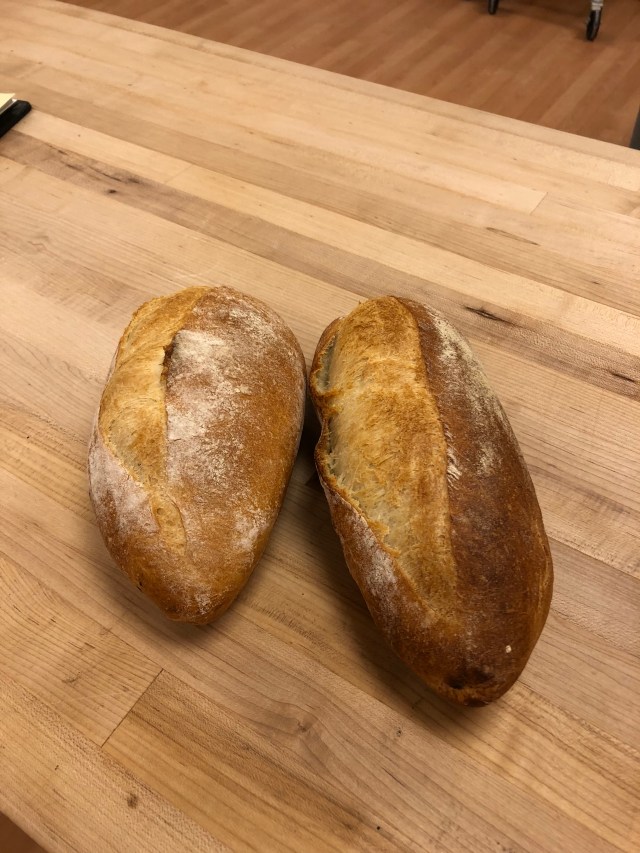
My batards. The one on the right was the first way we were shown and the one on the left, the second.
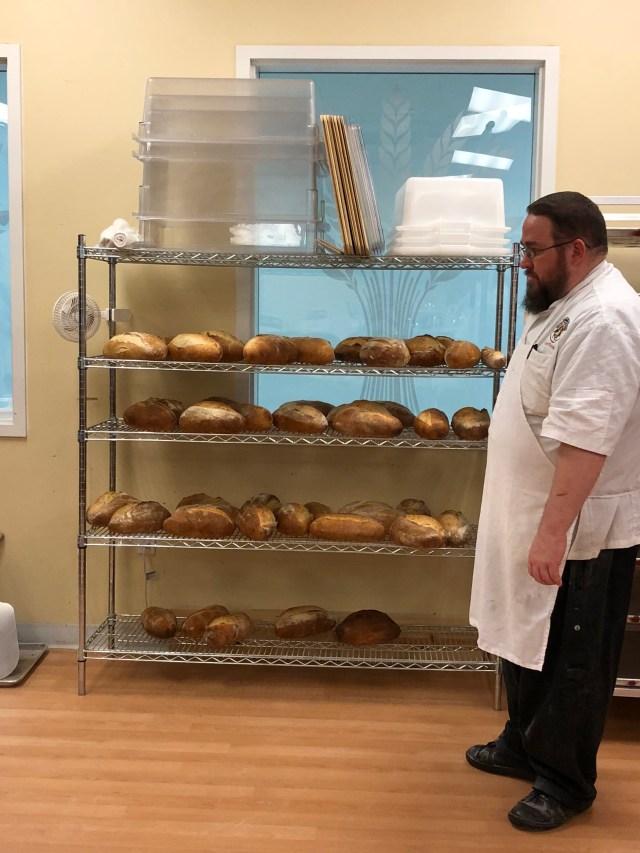
The first batch of batards.
I want to take the next two sessions of bread making which are Artisan breads and then learning the baker’s math and being able to develop your own recipes. However, the current calendar of classes is already full! So, I signed up on the wait list and will probably get into the next classes when that calendar is dropped in March.
I gave the class all high marks and really thought it was worthwhile. I just hope I can remember everything and be able to transfer the knowledge to my home kitchen.


 Millers' Time
Robin, love your blog and all of the work you put into making it so fine. It was a pleasure to be your partner. Let me know if you sign up for any other classes. I will be practicing what we learned to become somewhat proficient before taking another class. But the cla.sses really exceeded my expectations.
Roger, we should have exchanged emails or phone numbers. I wanted to tell you that I saw the yeast at Costco for around $2.99. I had already ordered some from King Arthur, though, since I ordered some of the Harvest Blend that we used in the multi-grain bread. Also, did you get on the wait list for the artisan class?
Hey, just found your reply, email me at itsroger@comcast.net. I appreciate the info about costco, thanks. So far I have been having fun with bread. I made the whole wheat recipe from the class with one third rye flour and the rest bread flour. It was VERY wet, incorporated about a cup of AP. Flour in kneading, and came out as a tasty light rye! But I must make it better. Maybe if I use the tender white bread recipe…hello tummy! But I can’t pass up homemade bread.
Did you take an artisan class?